GPT-4's Water Use Equals Three Bottles per 100 Words
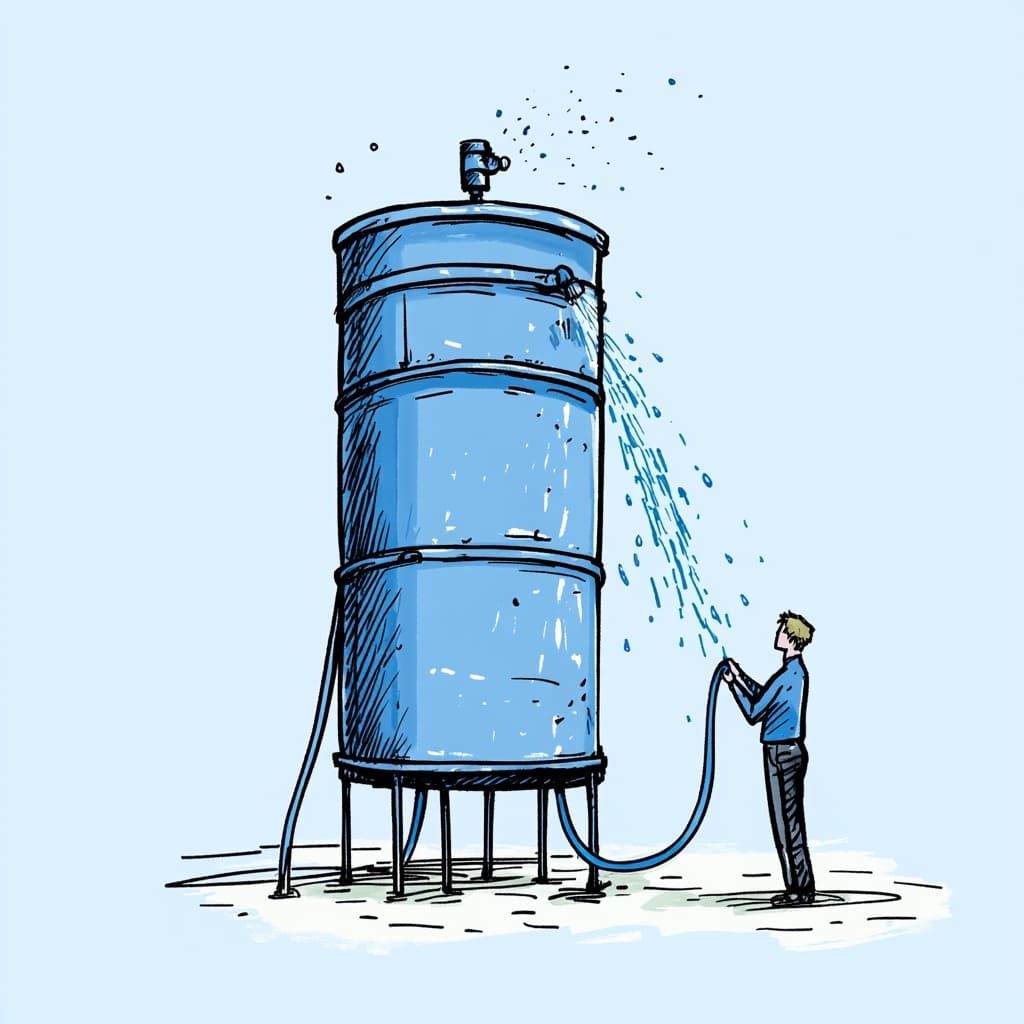
Research from the University of California, Riverside, highlighted by the Washington Post, reveals the unexpectedly high costs of using generative AI. Cooling the servers that process data requires significant amounts of water, even when it's just generating text. This comes on top of the already heavy strain on the power grid.
Water Use Varies by Location and Electricity Prices
Water consumption varies depending on where the data center is located and its proximity to the power grid. In Texas, it's estimated that around 235 milliliters of water are needed to generate a 100-word email, while in Washington it takes as much as 1,408 milliliters - equivalent to three 500-milliliter bottles. Although these amounts may seem small, they add up quickly when users tap into GPT-4 several times a week, or even daily.
Data Centers Affect Local Water and Electricity Bills
Data centers aren't just heavy consumers of water and electricity, they also contribute to higher water and electricity bills for residents in nearby communities. One example is Meta, which used 22 million liters of water to train its LLaMA-3 model - an amount that could grow nearly two tons of rice or cover a year's water use for 164 Americans.
GPT-4's Electricity Use Is Also High
The electricity required to run GPT-4 is also significant. If one in ten working Americans used GPT-4 once a week for a year, the total electricity consumption would equal the energy needs of every household in Washington D.C. for twenty days. This shows how energy-intensive even relatively moderate use of AI can be.
Companies Lack Concrete Environmental Goals
Representatives from OpenAI, Meta, Google, and Microsoft have emphasized their commitment to reducing the environmental impact caused by AI. Microsoft's Craig Cincotta stated the company is working toward cooling methods that will eliminate water consumption entirely. But without concrete plans or timelines, this comes across as a vague promise. The financial upside of AI still appears to be a higher priority than environmental goals.



