Auraflow: Open Source That Challenges Stable Diffusion 3
Auraflow challenges Stable Diffusion 3 with open source and powerful performance, but requires a lot of resources. Is it the AI image generator of the future? Read more!
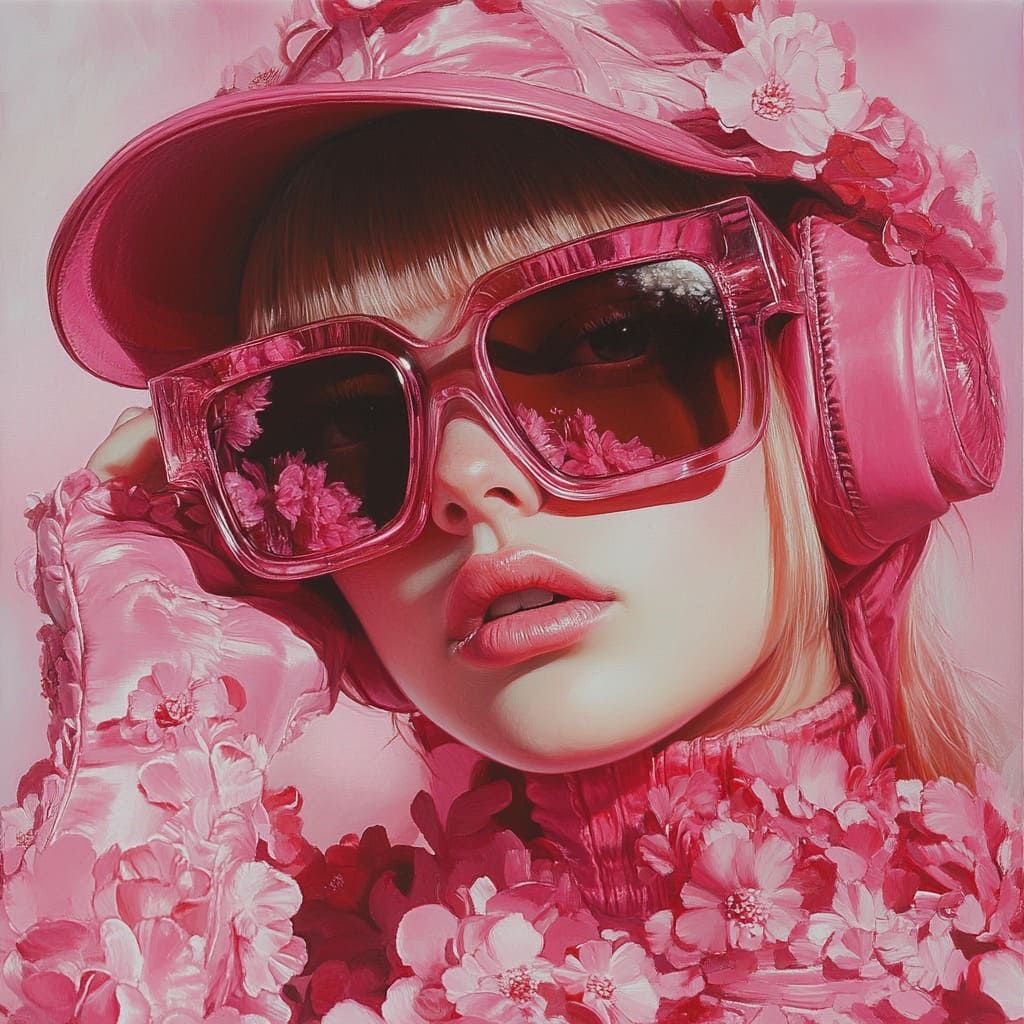
A new contender has entered the arena of open-source AI image generators: Auraflow. Launched last week by generative media company Fal AI, Auraflow has quickly attracted interest with its Apache 2.0 license, which is significantly more open than the restrictive license Stability AI used to release Stable Diffusion 3 (SD3).
Open Source Speeds Up Development
Proponents of open source argue that such projects can accelerate development cycles in competitive industries, since developers are freed from licensing and legal restrictions. Without licensing fees, dedicated communities often form around capable open-source projects, where developers can adapt, modify, train, and even earn money from their work.
Fal AI, founded in 2021 by engineers Burkay Gur and Gorkem Yurtseven - with backgrounds at Coinbase and Amazon respectively - emphasizes that open source in AI is under threat. "Some have even boldly claimed that open source in AI is dead," they say. "Not so fast!"
Performance and Usage
Auraflow underwent four weeks of intensive training with images of various sizes and resolutions. The result? A GenEval score of 0.64, which rose to 0.703 with the help of a prompt-enhancement process similar to the one used in DALL-E 3. This means the model performs well in synthetic benchmarks, but Auraflow is still in beta, version 0.1, rather than a stable release.
The model is, however, demanding on hardware, requiring a graphics card with around 12GB of VRAM to run the fp16 version - unlike SD3, which gets by with 6GB of VRAM. Fal AI is working on a more manageable version for consumers with less powerful graphics cards.
Auraflow can be downloaded from Huggingface and run in ComfyUI with a custom node also available in ComfyUI Manager.
Comparison With SD3
Auraflow holds its own as a strong alternative to SD3, but is it good enough to beat it? We've compared the two base models and tested their performance across different art styles and prompts.
Art Styles and Creativity: Auraflow handles impressionistic styles with bold brushstrokes and vivid colors, while SD3 is more detailed and structured. Both models have their strengths and weaknesses in different contexts.
Realism: SD3 Medium offers a more detailed, hyperrealistic image, making it better suited for this type of prompt.
Illustration: SD3 Medium delivers a scarier, more detailed illustration, making it better for horror scenarios.
Prompt Adherence: Auraflow follows the prompt more closely in a surreal scene, making it the better model for fantasy elements.
Spatial Awareness: Both models show a good understanding of spatial composition, but it's an even match.
Anime and Manga: SD3 Medium offers a more detailed and dynamic rendering, making it better for this genre.
Our Conclusion
Auraflow excels at capturing impressionistic and imaginative styles, while SD3 Medium is better at detailed, hyperrealistic scenes. Auraflow's open Apache 2.0 license gives it a strategic advantage, especially for fine-tuning, but its high VRAM requirements are a drawback. SD3 Medium, with its lower hardware requirements, is currently the better model in this comparison.
Over time, however, Auraflow could become a serious contender, especially if a smaller, more efficient version is developed that reduces its hardware requirements.



