Apple's New Study Reveals AI Weaknesses in Solving Simple Math Problems
Apple's latest research shows generative AI models struggle to solve even simple math problems, raising concerns about their reasoning ability and reliability in critical settings.
Apple's latest research has revealed major challenges for generative AI models in solving even simple math problems. Even though AI has made impressive strides in many areas, from text generation to image creation, this study points to critical weaknesses when it comes to reasoning and mathematical accuracy.
Generative AI: Impressive, but Flawed
Over the past year, generative AI models have fascinated many industries with their ability to generate human-like text, answer complex questions, and even create creative content. But Apple's latest research reveals these models still struggle with simple math problems, particularly when small changes are made to how the questions are phrased.
According to the researchers, large language models (LLMs) like OpenAI's GPT-4, which power tools like ChatGPT, tend to stumble when faced with simple arithmetic or logic problems. Even trivial changes to how a question is worded can lead to incorrect answers, pointing to a significant gap in AI's reasoning ability.
Apple's Deep Dive Into AI Reasoning Ability
In a study published by Apple, the company's research team tested several leading AI models on various math problems. The results were surprising: even though AI performed well in many scenarios, its reasoning ability quickly broke down when math challenges involved small changes in wording or step-by-step solutions.
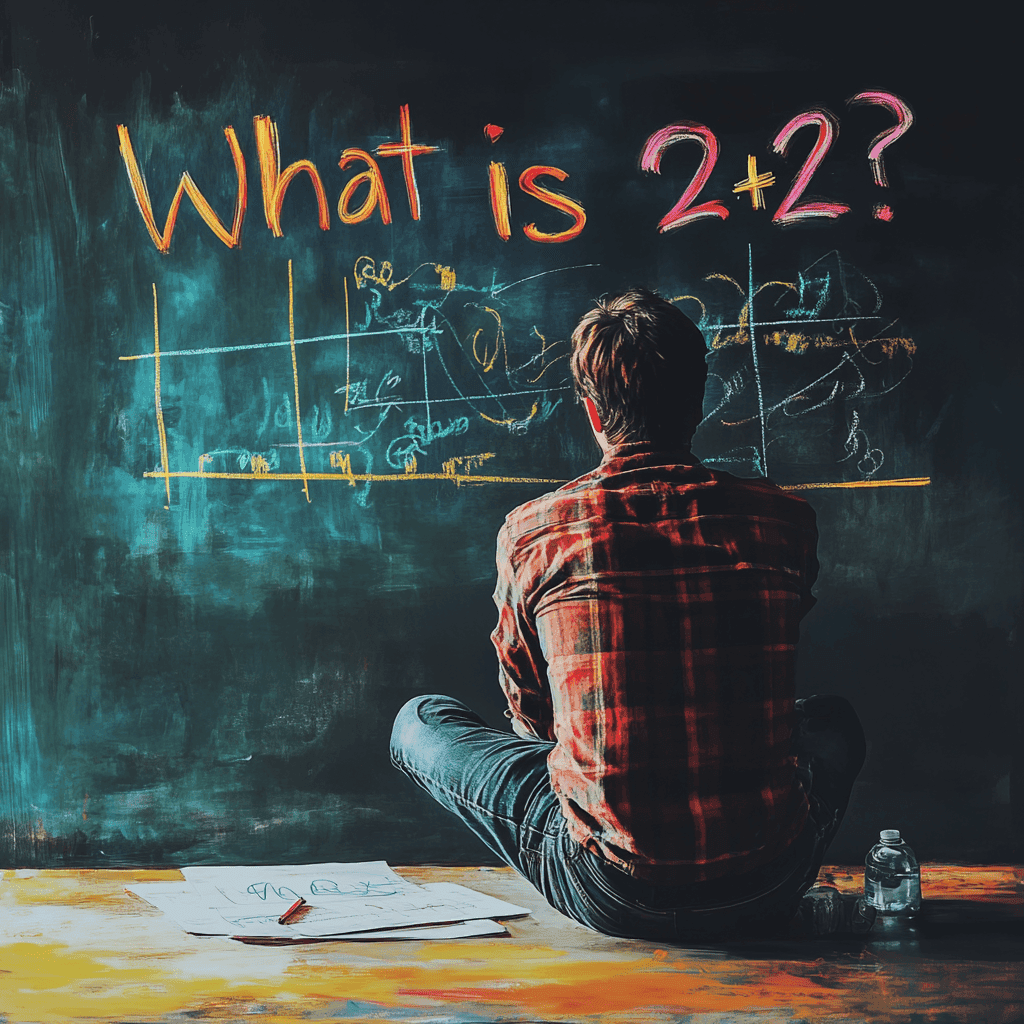
For example, models that correctly answered a simple question like "What is 2+2?" would often fail when the problem was reworded or presented in a slightly more complex way. This points to a broader shortcoming in how AI processes logical reasoning, particularly for tasks requiring step-by-step problem-solving.
TechCrunch's coverage of the research highlights the concerns this discovery raises. The study found that even when AI models are specifically trained to handle math problems, their ability to maintain accuracy and consistency across different contexts remains limited.
Business Impact: AI Isn't Ready for All Complex Tasks
Apple's findings have implications beyond academic questions. Many companies increasingly rely on AI to automate complex processes, including decision-making and data analysis. But as ZDNet points out, Apple's research shows AI's reasoning ability still has a long way to go. Business leaders should be cautious about expecting AI to handle tasks that require precise mathematical reasoning or complex problem-solving.
For industries like finance, technology, and healthcare, where accuracy is critical, these findings are a reminder that AI models need further development before they can fully replace human judgment in certain areas. Generative AI may be excellent at processing large amounts of data, but when it comes to logical reasoning, particularly in math, humans still outperform machines.
The Path Forward for AI Development
Apple's research has spurred efforts to improve AI models' reasoning ability, particularly for mathematical and logical tasks. Wired's coverage of the study suggests improved architecture for large language models could enhance their performance in areas like math, but the problem is far from solved.
The broader AI community is now focused on understanding why these models fail at seemingly simple tasks. Techopedia's analysis emphasizes that these failures often stem from how LLMs are trained - on enormous amounts of text data rather than on specific mathematical rules. As a result, the models are good at pattern recognition but struggle with tasks that require strict logical consistency.
The study underscores that even though AI can generate text, answer questions, and even assist in creative processes, it shouldn't be seen as an infallible tool, especially not when precise reasoning is required.
Conclusion
Apple's research has revealed significant limitations in AI's ability to handle even simple math problems, reminding us that despite its progress, AI is still far from perfect. As AI continues to evolve, more focused research is needed to improve its reasoning ability, particularly for tasks requiring logical consistency and mathematical precision.
For now, companies should carefully consider where AI is most useful and understand its limitations. As Apple's findings show, AI can complement human work, but it shouldn't be fully relied upon for tasks that require a high degree of reasoning and accuracy.
Subscribe for more insights on the latest AI tools and stay up to date!



