AI Glasses for the Blind, Built With a Raspberry Pi
Khairul Alam's "Third Eye for the Blind" is an innovative, cost-effective aid for blind people, built with a Raspberry Pi and AI to describe their surroundings in real time.
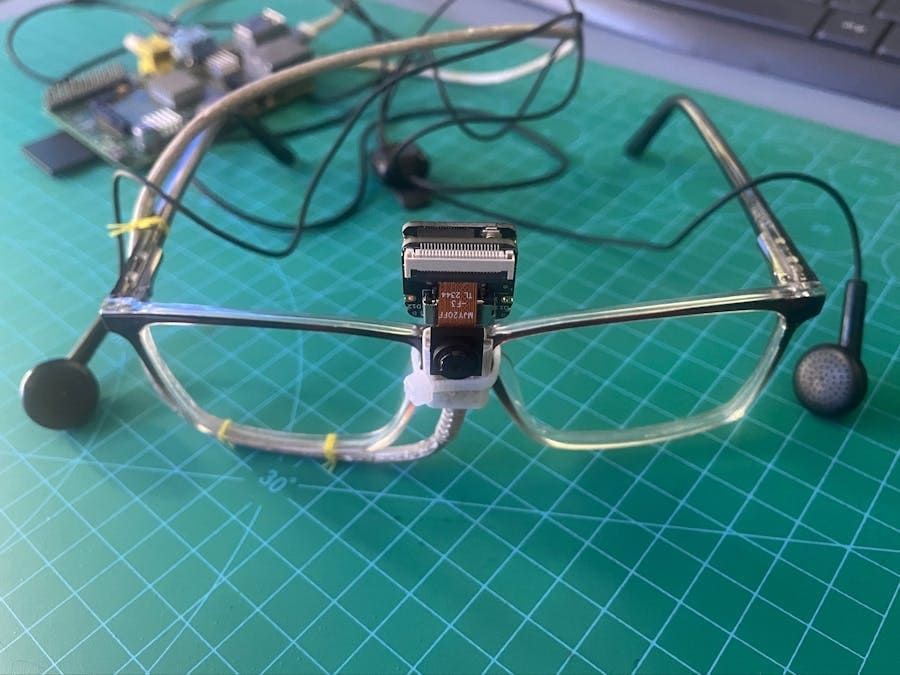
"Third Eye for the Blind" is a pair of smart glasses that use artificial intelligence (AI) to give the wearer continuous descriptions of their surroundings. This innovative solution was developed by physician and hardware hacker Khairul Alam, who wants to show that it's possible to build effective aids for blind people without it costing a fortune.
The Technology Behind Third Eye
The glasses are built from a combination of ordinary glasses, a Raspberry Pi, and a Xiao ESP32S3 sensor module equipped with a video camera and image processor. The module is mounted on the glasses, and the software analyzes images from the camera, identifies objects in the surroundings, and uses AI to describe them. The descriptions are sent to a Raspberry Pi, which converts the text to speech using AI-based software, which is then played through a simple pair of headphones.
Open Source and Training the AI
Khairul Alam has shared his code and documented the project on hackster.io. He used Edge Impulse to train the AI
with a modest number of objects: six different types with a total of 188 images so the AI
could learn to identify what's in the surroundings. He has also developed code for communication between the Raspberry Pi and the Xiao ESP32S3.
Cost-Effective Components
One of the most impressive aspects of the project is the low cost of the components, which together come to under 1,000 kronor. Khairul Alam used an older model of Raspberry Pi (Model B) and a sensor module costing under 150 kronor. In addition, a power bank, ordinary glasses (without lenses), and an old pair of headphones are needed to complete the device.



